11.4. – 4.5.2025, Forum Box, Helsinki

Kuvat 1–4 Anna Autio, kuvat 5–14 Henrik Pathirane
FI (scroll down for English)
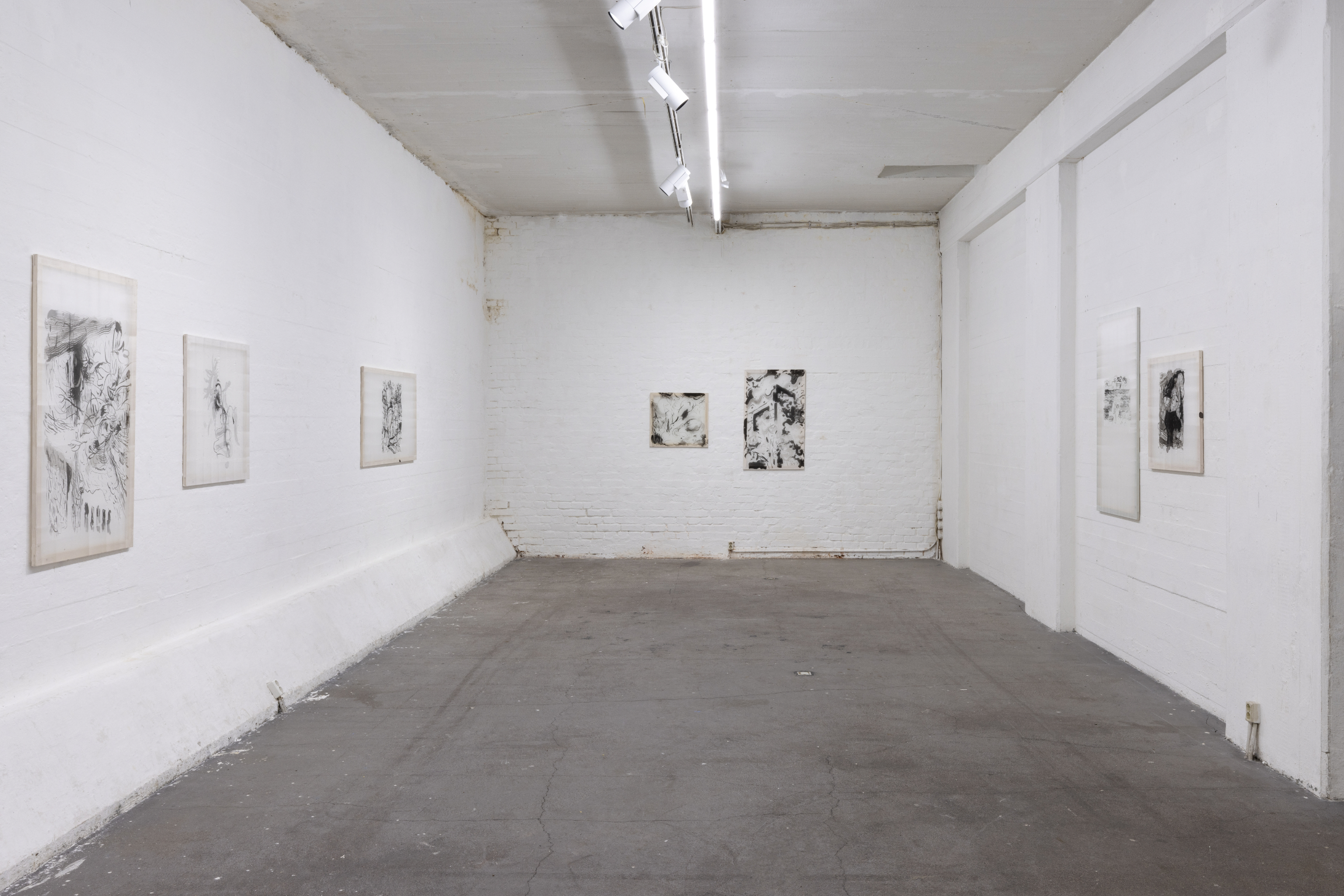
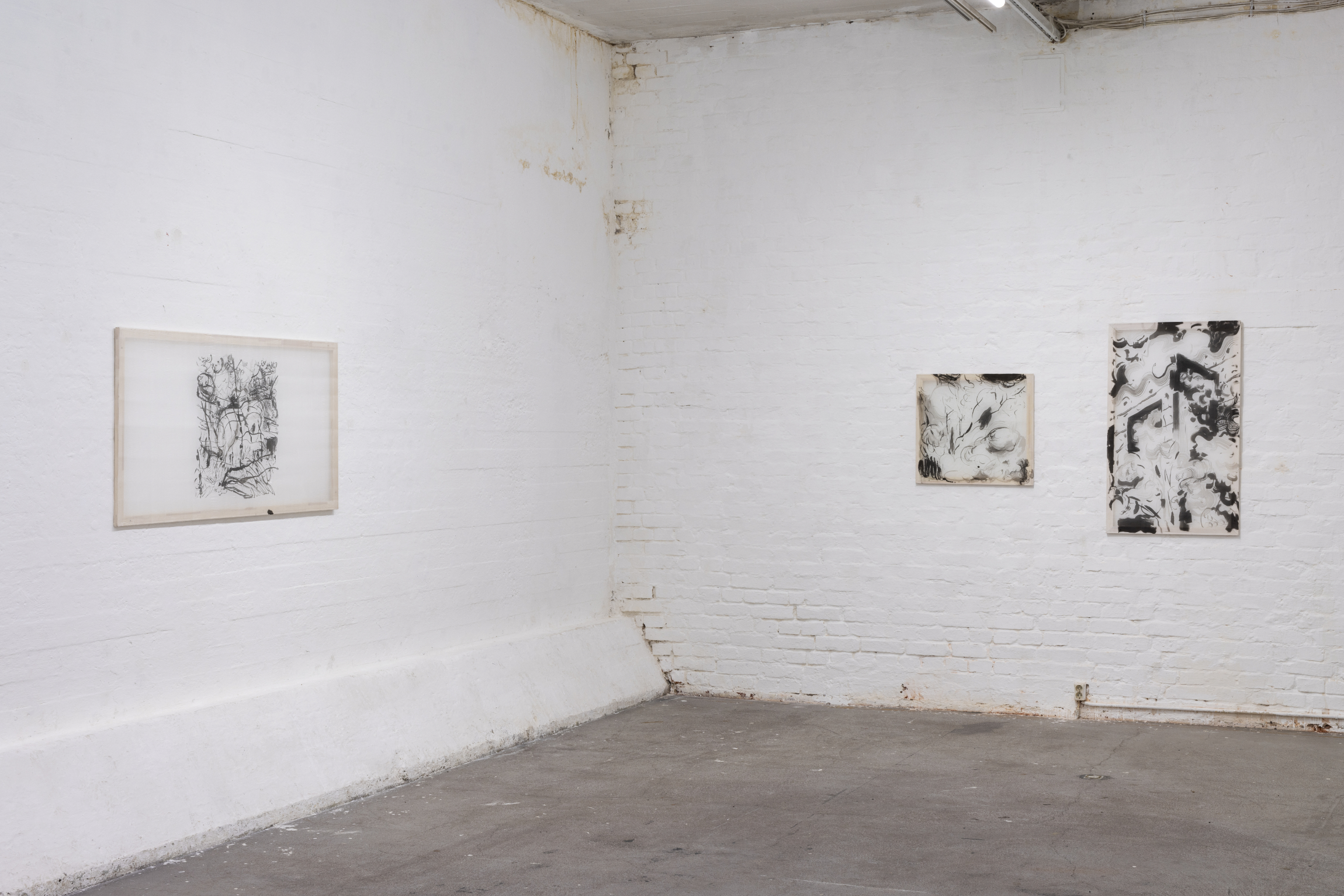
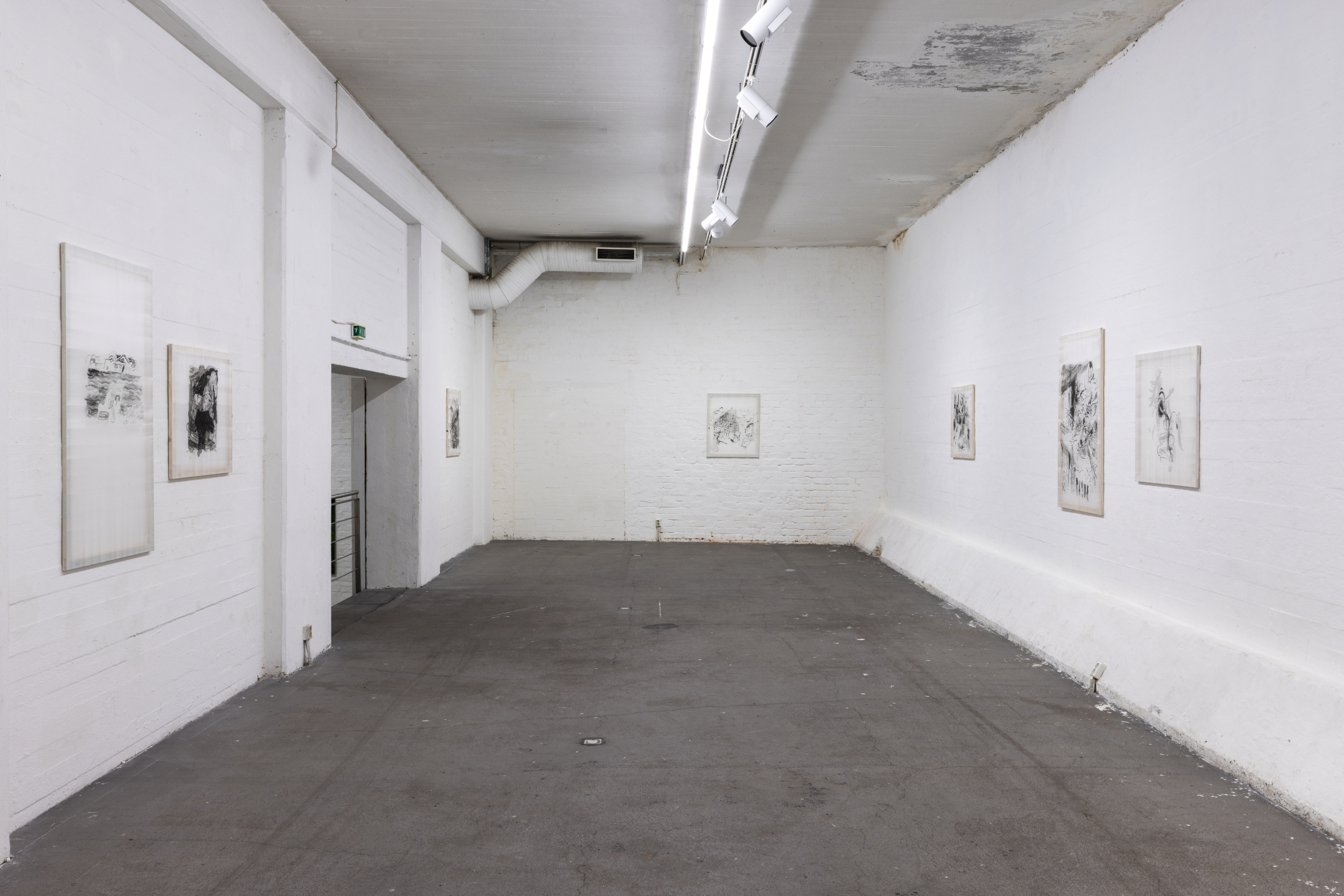
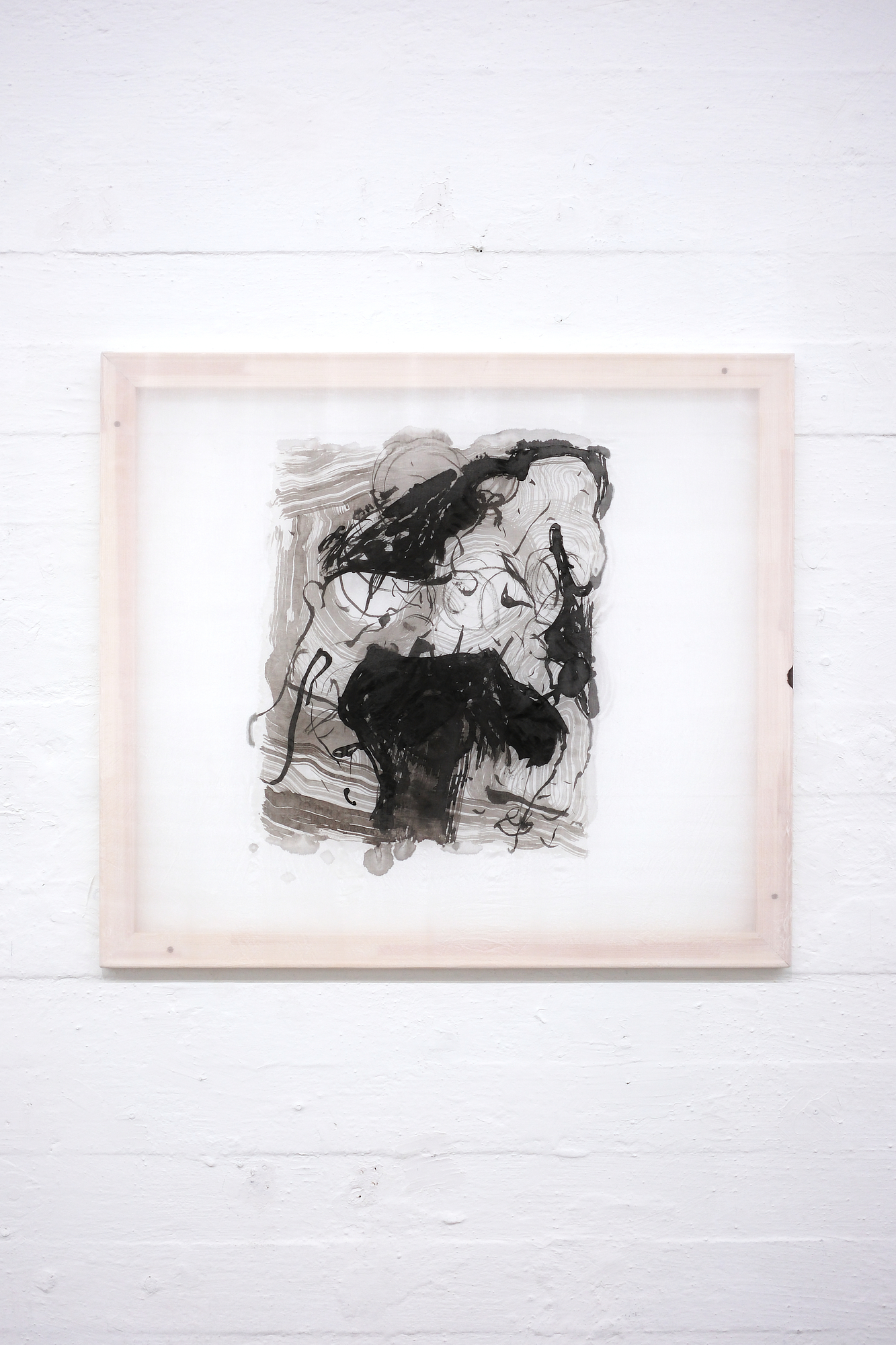
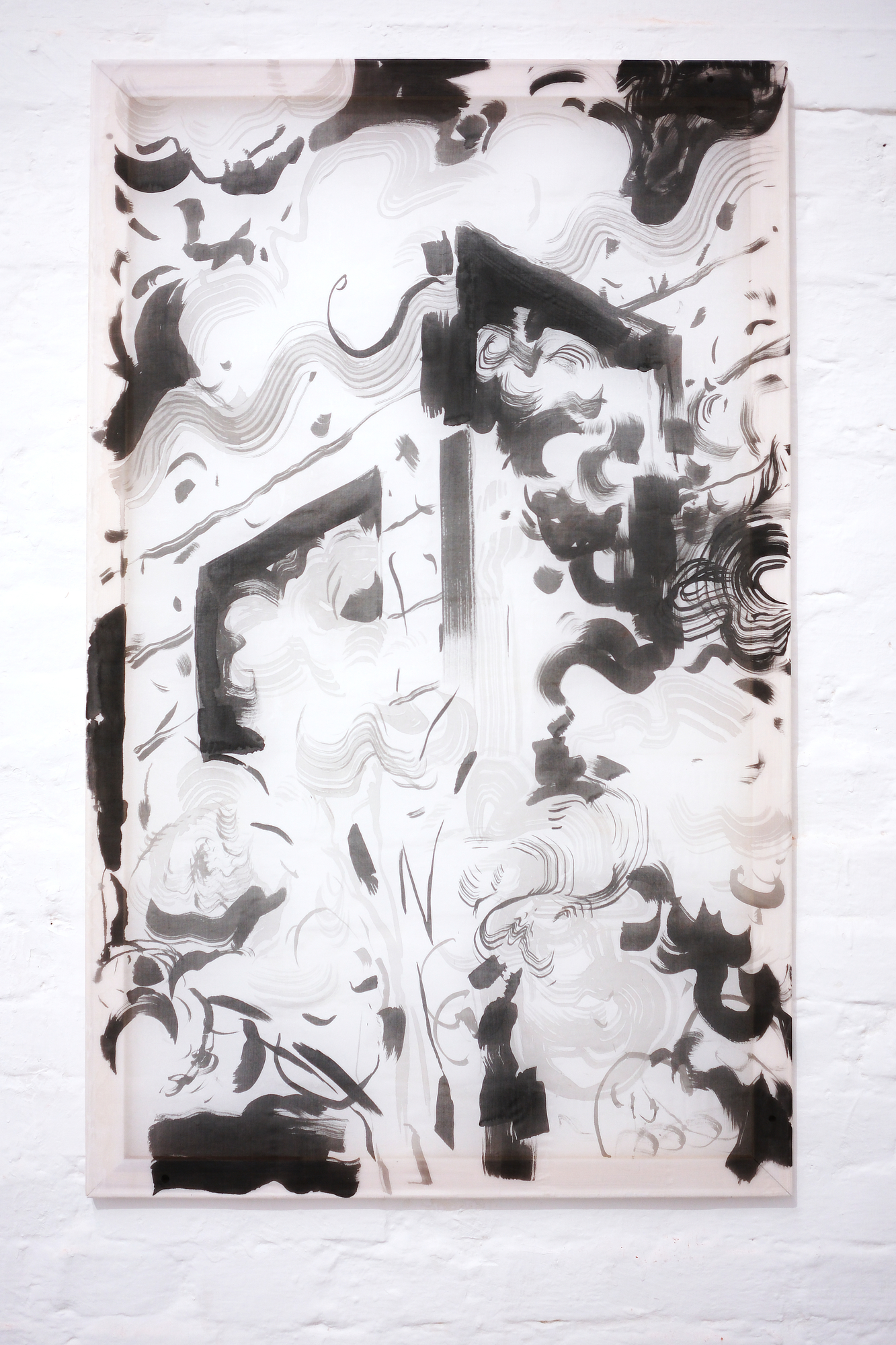
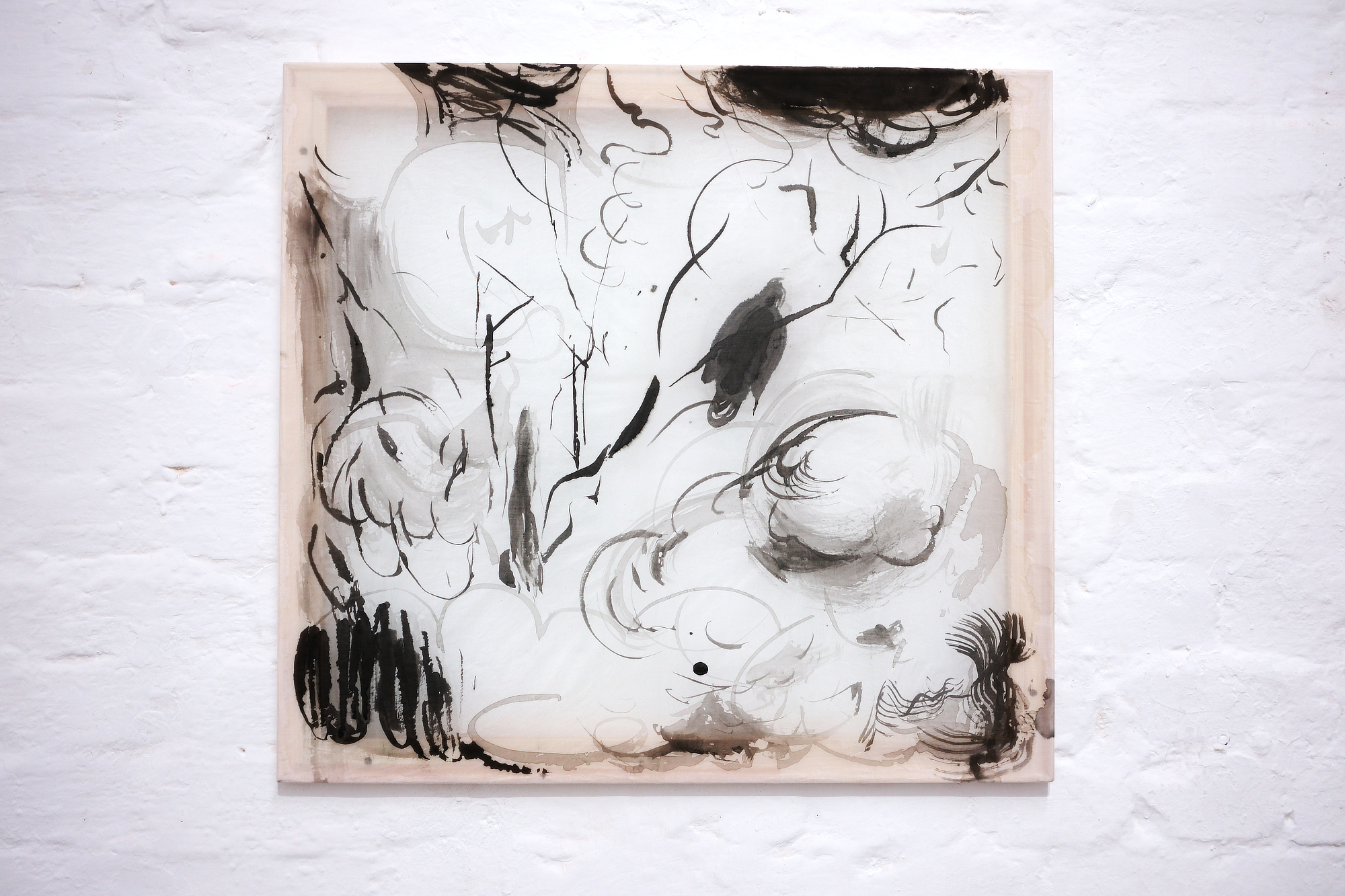
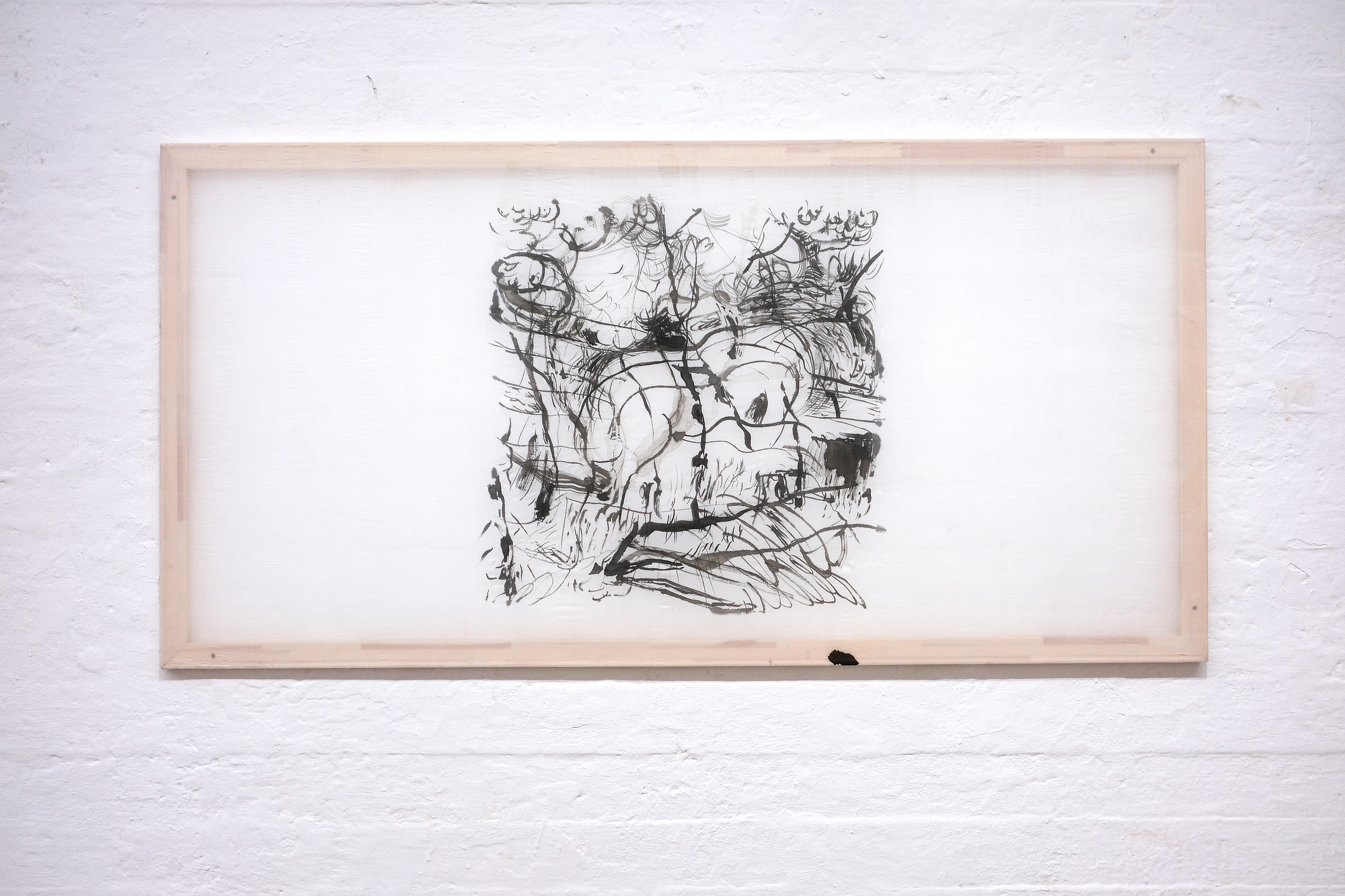
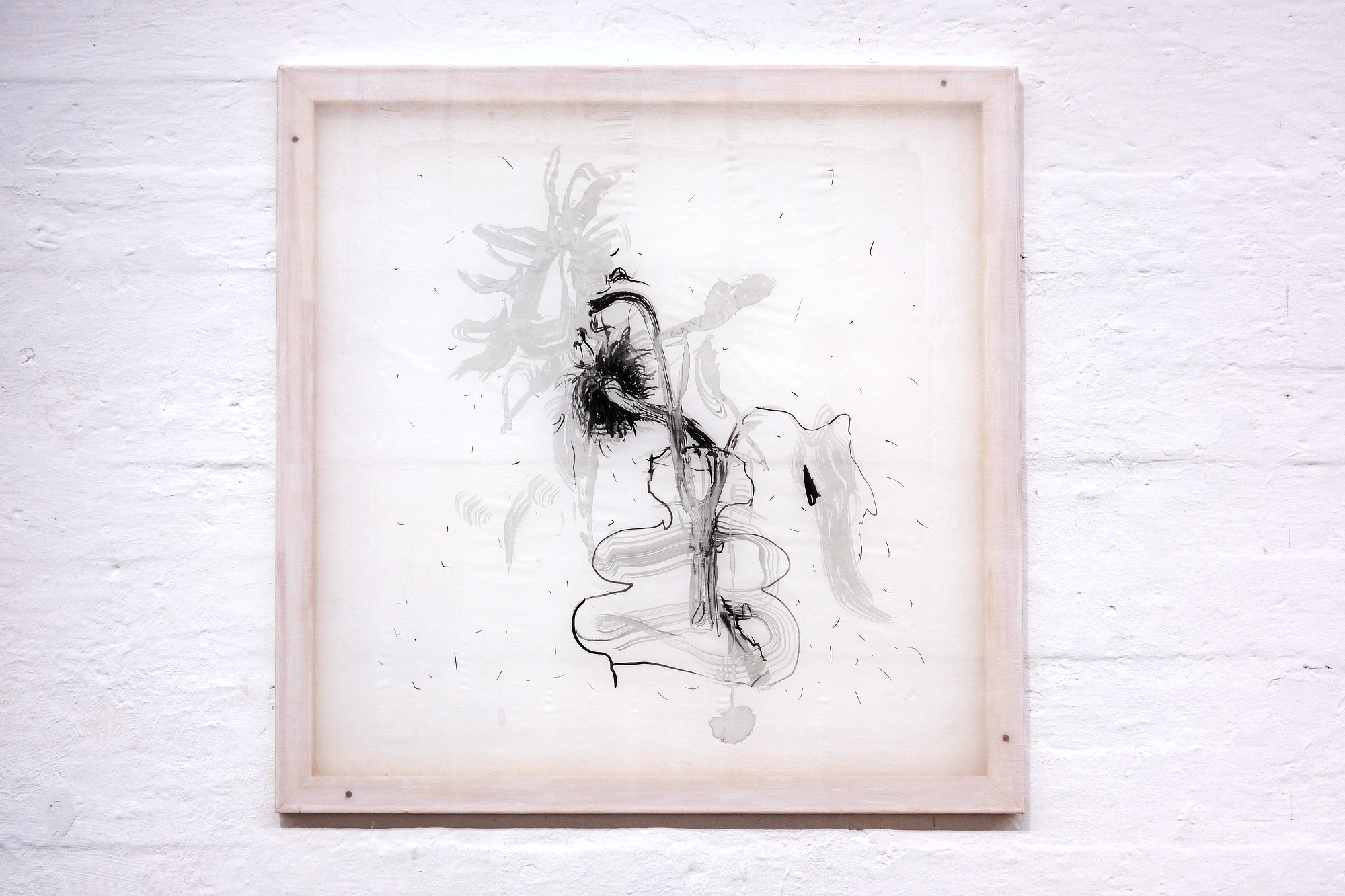
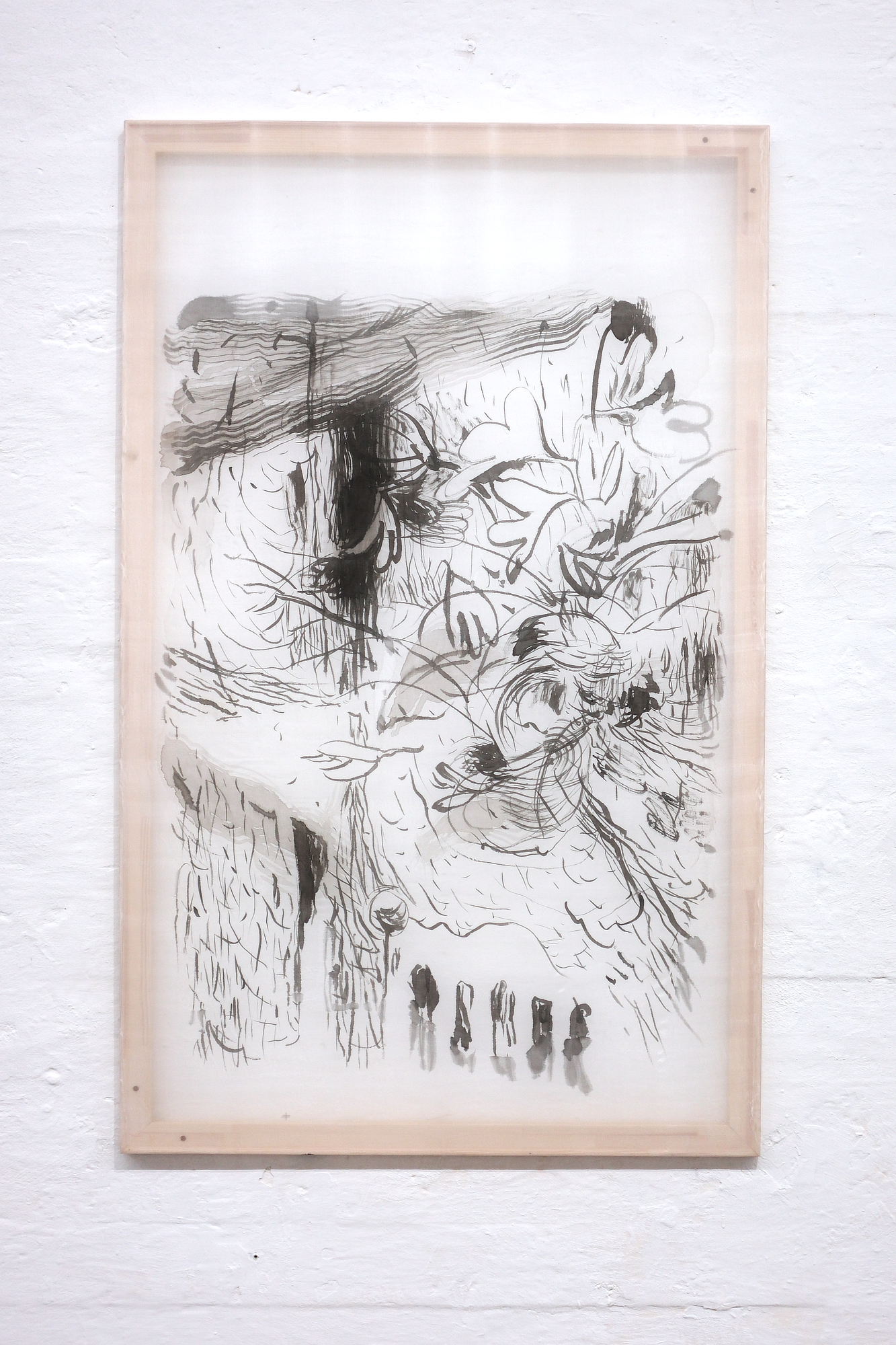
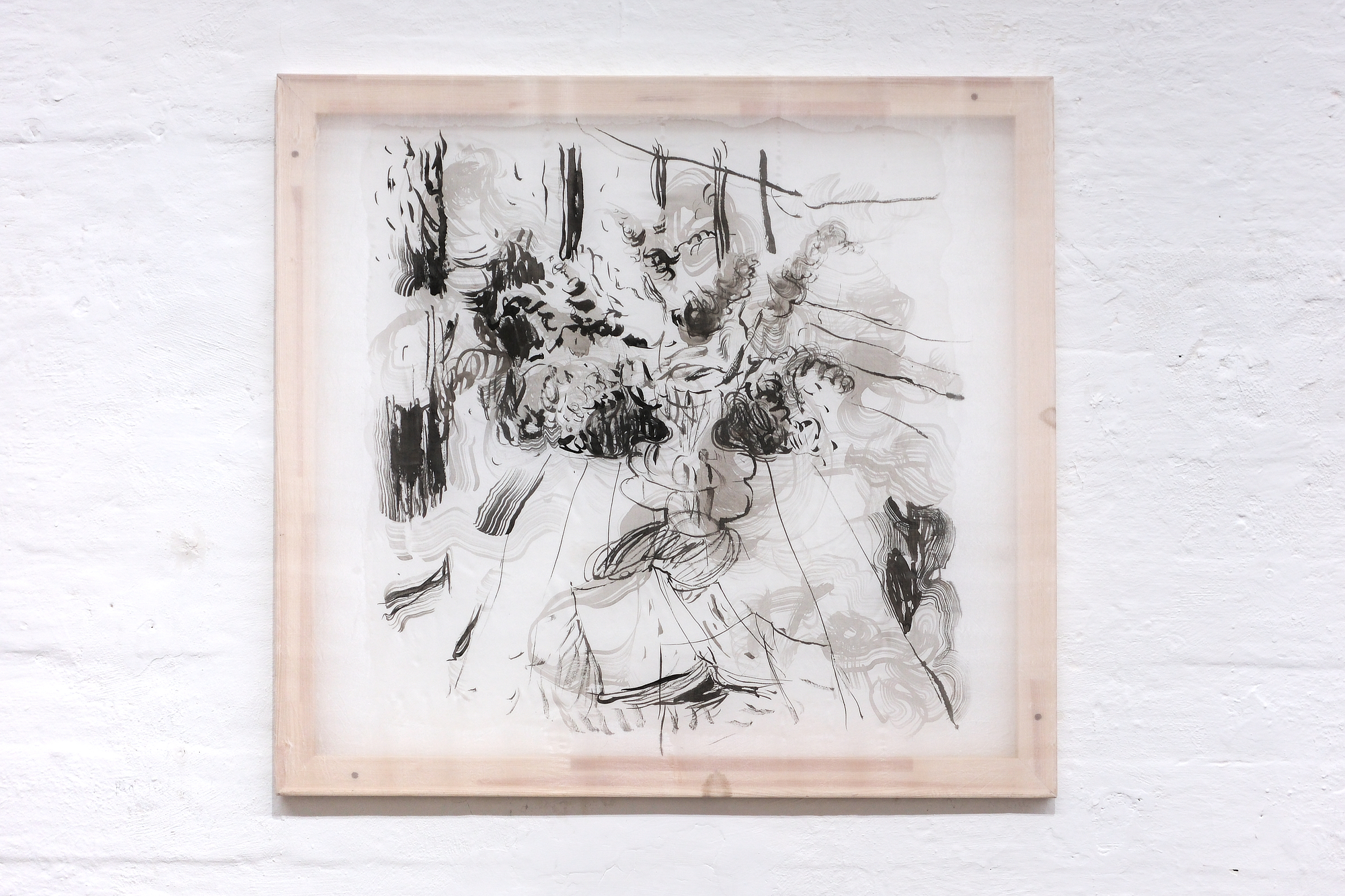
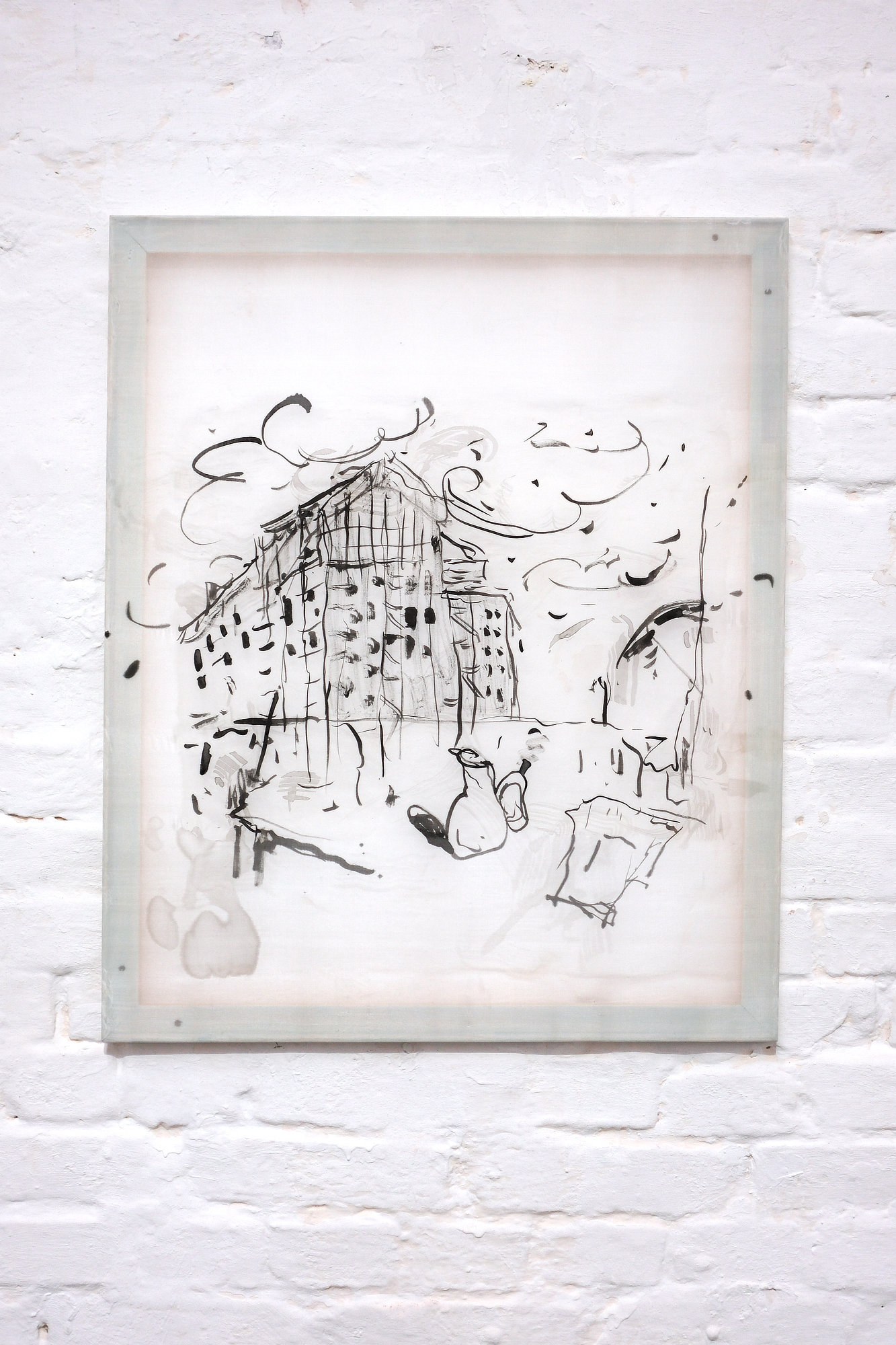
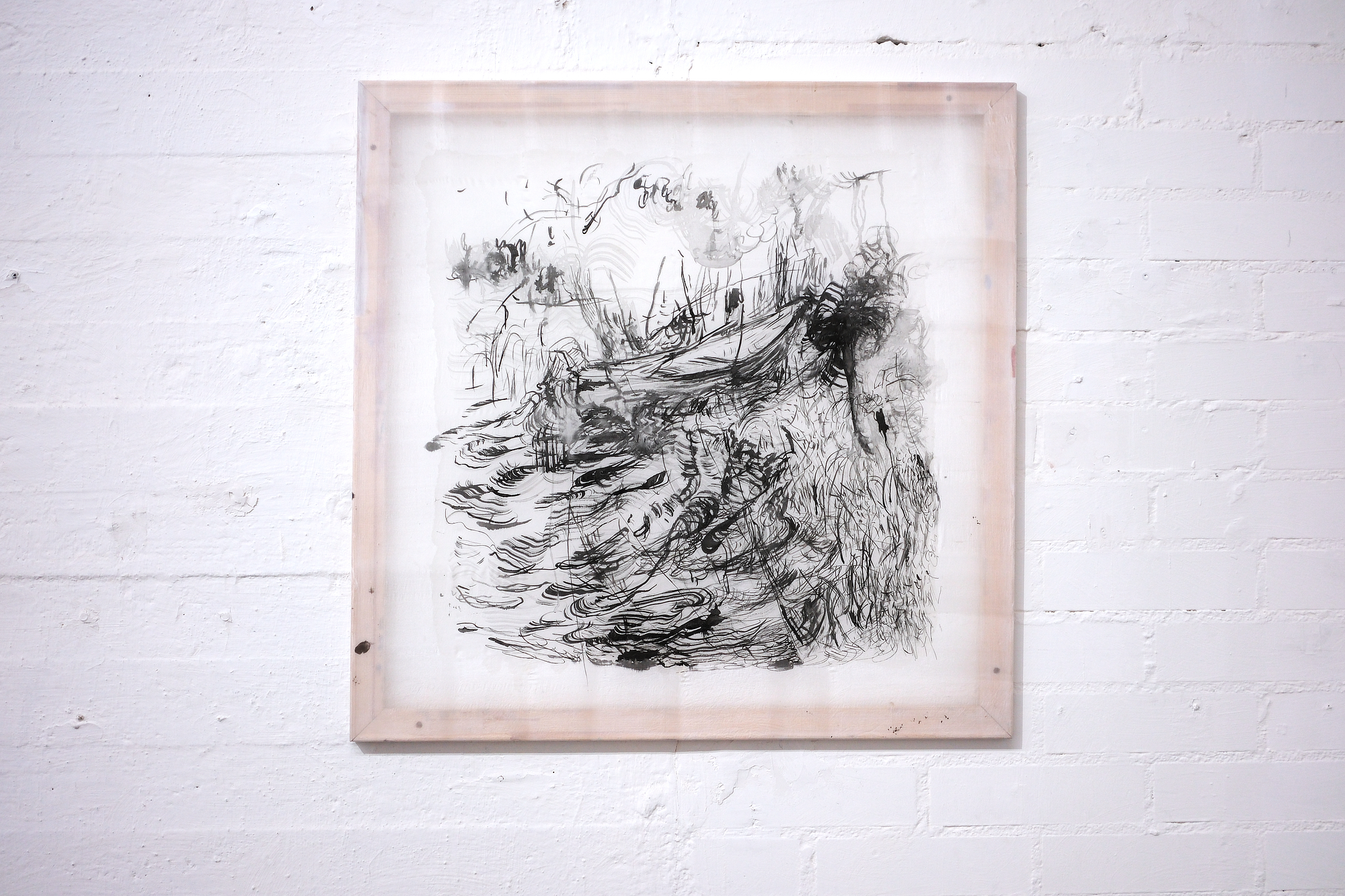
Verna Joki maalaa musteella havainnosta. Havainto on suoraa, se vaatii välitöntä läsnäoloa kohteelle, minkä ansiosta kuvat rakentuvat suoraan tekijän käsialasta. Niistä välittyvät keveys ja nopeus sekä värin käsittelyssä että maalauspohjan, läpikuultavan valkoisen silkin, käytössä.
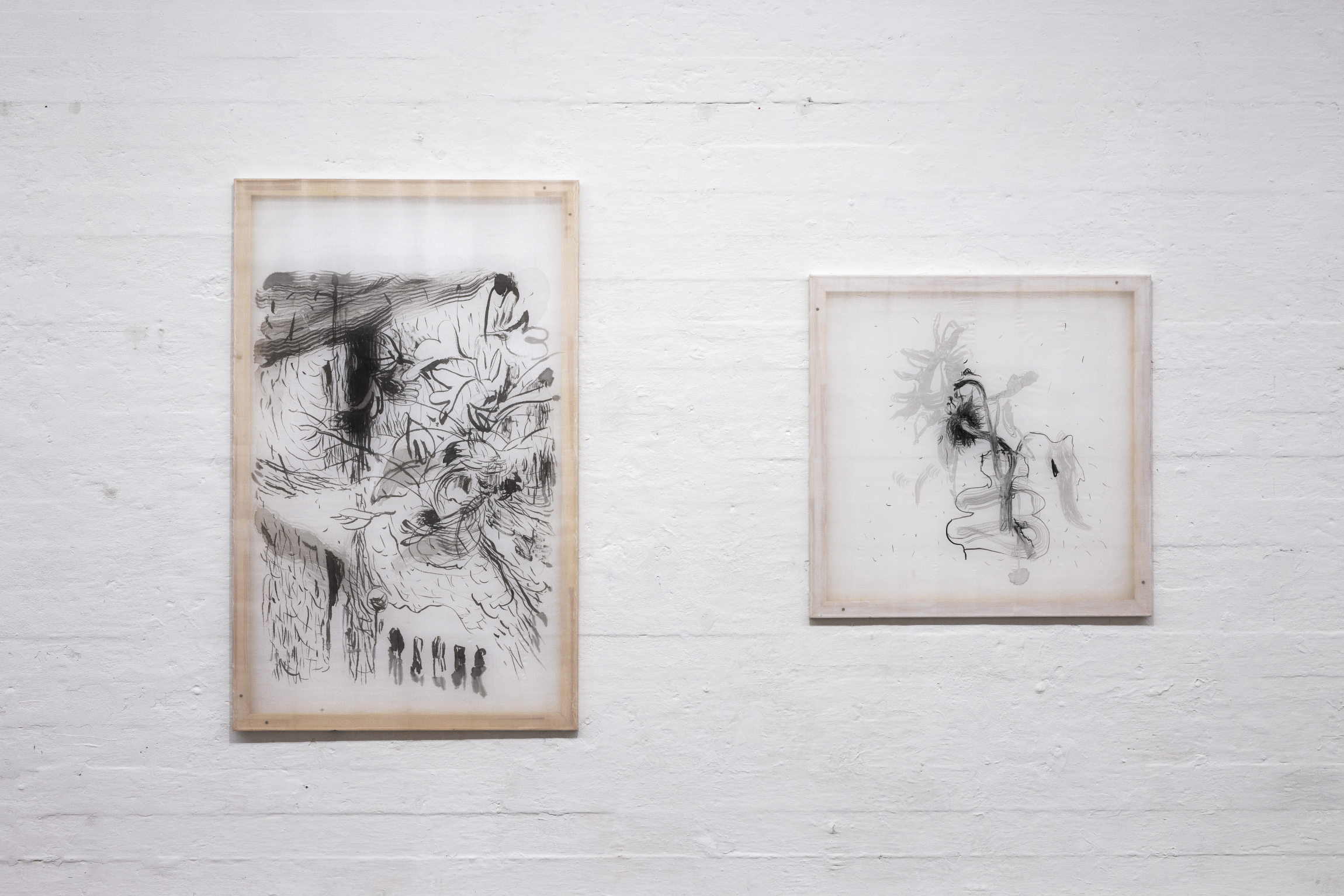
Kallisarvoisena pidetyn silkin vaikutelma on samankaltainen kuin silkkipaperissa, mutta kankaan muisti on paperia lyhyempi ja hetkellisempi. Toisin kuin paperi kangas oikenee ja siliää, rypyt saa halutessaan häviämään. Hohtavalta silkkikankaalta puuttuu myös paperin kuiva tuntu: sen tilalla on kyky läpäistä väriä. Ohuesti pohjustetun silkin valinta maalausten pohjaksi vaikuttaa myös teosten muotoon, sillä kiilapuut riittävät pitämään työn koossa, eikä kehyksiä tai teoksia kiertävää passepartout’ta tarvita. Suoruuden vaikutelma ulottuu näin myös Joen teosten rakenteeseen.
Kangasta ja silkkipaperia yhdistää kuitenkin niiden hetkellisyys. Jos taiteilijalle sattuu hänen maalatessaan virhe, se jää peruuttamattomaksi, ja kun vedon on kerran tehnyt, on enää vaikea tai mahdotonkin korjata mitään. Herkän läpikuultava, pehmeästi laskeutuva silkkipohja osoittautuu taiteilijalle armottomaksi, sillä jokainen ainutkertainen jälki jää pysyväksi. Sitä ei ole hinkkaaminen pois ilman, että tulokseksi jää lisää jälkiä, lisää poistettavaa, uutta väriä.
Viivan veto on väistämätön asia, lähes kohtalon kysymys, sillä se määrää koko teoksen sisällön. Työskennellessään taiteilija työskentelee kuin tyhjän päällä, sillä väri tulee kankaalle vielä muotoutumattomalta ei-minkään alueelta ja viiva etenee kohti taustan valkoisuutta. Siksi siveltimen kalligrafiaa muistuttavaa jälkeä on mahdotonta nähdä ennen kuin viiva on vedetty. Piirtäminen ja maalaaminen on siten kuin sokeaa toimintaa ennennäkemätöntä kohti.
Joen mustemaalausten viivat ovat tiheitä mutta ilmavia. Niitä yhdistää voimakas vaivattoman liikkeen tuntu, ja katsoessa tulee tunne siitä, että teokset olisivat kehittyneet kuin itsestään ja viivat asettuneet paikoilleen paineettomasti. Tätä ajatusta vahvistaa se, että Joki on jättänyt teoksiinsa tilaa, tyhjää kangasta kuva-alan ulkopuolelle. Kaikkea ei ole pakko täyttää, ja samalla valkoinen aluekin on teoksissa täyden pinnan lailla merkityksellinen. Päävärejä on kaksi, musta ja vaalea harmaa: harmaasta syntyy kuin varjoja mustalle, mikä saa katsojan aistimaan tilaa ja päällekkäisiä kerroksia. Teoksissa Palta Kyrönlahdessa, Kevätlaulu, Iltapäivä Kyrönlahdessa, esseet ja Studio view without Hammershøissä maisemat yhdistyvät esineisiin asetelman tapaan, kun taas Vaarin asetelma, Matkamuisto Lempäälästä ja Kliivia tuntuvat ensin näyttävän esineen ja sitten avaavat sen maisemaa kohti. Ympyrän sulkee Venetsia: lomakuva rantakadulta, jossa lähenevät ja etääntyvät viivat täydentävät toisiaan kuin hetkeen istutetut diagonaalit. Viivojen tiheys hälvenee, seuraavassa hetkessä se kasvaa jälleen. Joen viivan rytmi on samalla katseen rytmi, sen liike silkkikankaalla.
Martta Heikkilä, FT, estetiikka
Taiteilija kiittää Koneen säätiötä ja Suomen taideyhdistystä työskentelynsä tukemisesta.
EN
Verna Joki paints with ink from perception. Her perception is direct: it requires her immediate presence with the painted subject, thus allowing the images to emerge directly. Joki’s works convey lightness and speed, both in the handling of color and in the use of the translucent white silk as a support for the painting.
The impression of the precious silk is akin to that of thin tissue paper, yet the fabric’s memory is shorter and more fleeting than paper’s. Unlike paper, the silk fabric can be straightened and smoothed, and wrinkles can be made to disappear. The shimmering silk also lacks the dry feel of paper, instead it allows color to seep through. The choice of lightly primed silk as the ground for the paintings also affects the form of the works, as mere stretcher bars are enough to hold the piece together, eliminating the need for frames or passepartout. This sense of directness extends to the structure of Joki’s works.
However, both fabric and tissue paper share a sense of transience. If the artist makes a mistake while painting, it is irreversible. Once a stroke is made, it is difficult or even impossible to correct it. The delicately translucent, softly draping silk proves to be unforgiving, as every single mark remains permanent. Attempts to erase an unwanted trace would only leave more marks, more corrections, more pigment on the ground.
Each stroke is inevitable, to the extent that it is almost a matter of destiny, as it determines the entire content of the work. While painting, the artist’s process is almost like stepping into the unknown, with the color emerging from an unformed space of nothingness and the stroke advancing toward the white background. For this reason, the brushstrokes, reminiscent of calligraphy, cannot be fully envisioned before the stroke is made. Drawing and painting thus become a blind act moving toward the unseen.
The lines in Joki’s ink paintings are dense yet light. They carry a strong sense of effortless motion, giving the impression that the works have formed on their own and the lines have settled into place without strain. This impression is reinforced by the fact that Joki leaves space in her works—unpainted silk beyond the image field. Not everything has to be filled in it, and the white areas become as meaningful as the fully painted surfaces. Out of the two main colors – black and light gray – the gray appears like shadows cast by the black, creating a sense of depth and overlapping layers. In works like Palta in Kyrönlahti, Spring warble, Afternoon in Kyrönlahti, essays, and Studio view without Hammershøi, landscapes merge with objects in a still life arrangement. Meanwhile, Grandpa’s still Life, Souvenir from Lempäälä, and Clivia seem to first reveal the objects before opening them toward a landscape. The circle closes with Venice: a holiday image from a waterfront promenade, where converging and diverging lines complement each other like diagonals placed in the moment. The density of the lines fades, only to intensify again in the next moment. Joki’s rhythm of line is also the rhythm of the gaze, its movement across the silky surface.
Martta Heikkilä, PhD, Aesthetics
The artist thanks Kone Foundation and Finnish Art Society for the support of her work.
 Humahdus